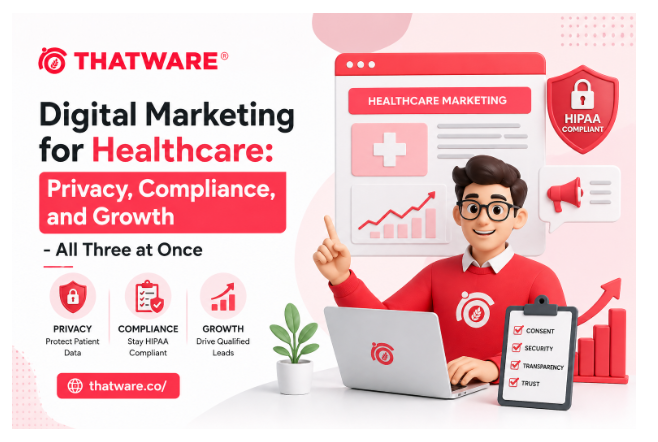
Marketing healthcare services has always required navigating a specific tension: patients need to find you, but how you communicate with them is constrained by regulations that exist for genuinely good reasons. HIPAA in the US, GDPR in Europe, and various jurisdiction-specific privacy frameworks create a compliance environment that makes the standard digital marketing playbook – retargeting, behavioral tracking, personalized messaging – legally and ethically complicated in healthcare contexts.
Starting from Compliance, Not Working Around It
Digital marketing services for healthcare that actually work are built around a core insight: you can run highly effective marketing within the compliance constraints, if you design for them from the start rather than retrofitting compliance onto standard campaigns.
What that looks like practically: organic search and content marketing are your best friends. Patients actively searching for healthcare information are expressing intent that doesn’t require behavioral tracking to act on. If someone searches “orthopedic surgeon for knee replacement near me,” you’re not inferring their health status from a pixel – they’re telling you. Showing up in that search, with content that genuinely helps them evaluate their options, is both compliant and effective.
Paid Search Without Privacy Risk
Paid search follows the same logic. Search-intent targeting – showing ads to people actively searching health-related queries – is fundamentally different from behavioral retargeting that involves storing and using health-related data in ways HIPAA restricts. Healthcare practices can run effective paid search programs within HIPAA guidelines; they just need the right account structure and careful attention to what data is being captured and how.
The retargeting piece is where the compliance risk concentrates. Pixel-based retargeting that shows ads to people who visited specific health condition pages can constitute sharing protected health information with advertising platforms – an area that’s generated significant regulatory action.
Review Management: Growth Lever and Compliance Minefield
Online marketing services for healthcare also need to think carefully about review management. Patient testimonials are powerful social proof, but HIPAA governs how they can be solicited, displayed, and responded to. A practice that responds to a negative Google review by referencing the patient’s condition – even to defend its care – has created a potential HIPAA violation. The response protocols need to be pre-built and followed consistently.
Social Media and Email: Where the Lines Are
Social media in healthcare works well for community building, patient education, and team humanization – all genuinely valuable. Paid social on platforms that use behavioral targeting based on sensitive categories requires careful configuration, and in some cases the privacy risk isn’t worth the reach benefit.
Email marketing, even for existing patients who have consented to communications, needs careful scoping. A newsletter about general health topics is different from messaging that references a patient’s specific condition or appointment history.
Why Privacy-Compliant Channels Have Better Long-Term Economics
The good news: the channels that work within healthcare compliance constraints – organic search, content marketing, consent-based email, properly configured paid search – are also channels with excellent long-term economics. They build durable audience relationships rather than relying on behavioral data that can be restricted or removed by regulation. They compound over time.
Privacy, compliance, and growth really can coexist. The design just has to start from the constraints, not treat them as obstacles to route around.