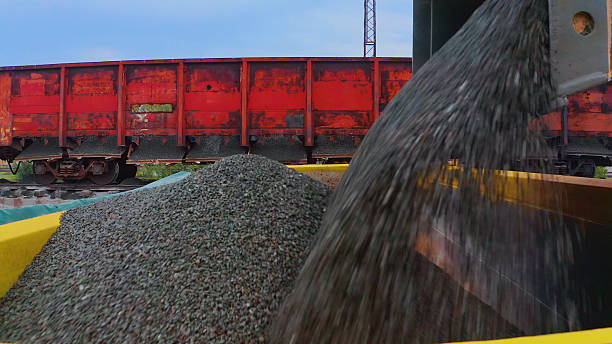
Two gravel loads can arrive looking similar from the truck yet behave very differently once they are spread. One type, #57 stone, stays open enough for water to move through, while crush-and-run packs into a tighter layer because it contains smaller particles and stone dust. Understanding that difference helps property owners avoid using drainage stone where a firm base is needed or compactable material where water needs room to escape.
Why #57 Stone Stays Open Instead of Packing Solid
Clean #57 stone is made up of angular pieces with relatively few fines between them. Those open spaces make the aggregate useful around drainage pipe, beneath certain slabs, and in other areas where water needs to pass through the stone instead of sitting on top. Angular edges still provide support, but the material does not tighten into the dense surface expected from a road-base mix. Homeowners should think of it as supportive stone with drainage space rather than a finished compacted surface.
Crush-and-Run Gets Its Strength From the Fines
Crush-and-run combines crushed rock with smaller fragments and stone dust. Pressure from a roller, plate compactor, or vehicle traffic works the finer material into gaps between larger pieces, producing a dense layer that resists movement. That binding action is why contractors often use it for driveway bases, parking pads, access roads, and other surfaces that need to carry regular loads.
Rain can help settle a properly prepared crush-and-run surface, although uncontrolled water still creates trouble if the grade is poor. Surface runoff should leave the area rather than soak into low spots, since a compact base performs best when the subgrade beneath it stays firm. Drainage planning therefore matters even when the selected aggregate is designed to pack tightly.
Which Material Belongs Around a Drainage Pipe?
Perforated pipe needs surrounding stone that leaves pathways for groundwater. For that reason, #57 stone commonly fits the job because water can enter the gravel bed, reach the pipe openings, and move toward the outlet without passing through a tightly packed layer of dust. By contrast, crush-and-run works against that goal because its fines are intended to close voids. Using it around a French drain can slow flow and make the trench less effective over time.
Driveway Bases Need a Material That Locks Together
Driveways have to handle braking, turning, parked vehicles, and repeated wheel paths without constantly pushing loose stone aside. Buyers comparing gravel for sale often find that crush-and-run makes more sense for the lower structural layer because it compacts into a firmer platform. The material can also be graded to restore a crown or smooth shallow ruts before the final surface course goes down.
Fresh #57 stone may still appear in a driveway project, but it serves a different purpose. Crews might use it where drainage is needed beside the travel lane, beneath a specific section, or as part of a layered design. Placing clean #57 across the entire driving surface can leave more movement under tires because there are fewer fines to hold the pieces tightly in place.
Why Searching for the Right Gravel Means Looking Beyond Stone Size
Project descriptions matter more than product names alone. Someone searching for gravel delivery near me should be ready to explain whether the stone will support vehicles, surround pipe, improve drainage, build a pad, or repair an existing base. Suppliers can then point toward an aggregate whose grading matches the job instead of relying on appearance or a familiar number. Sites that need soil along with stone may also benefit from reviewing rock and dirt for sale at the same time so deliveries can follow the order of work.
Compaction Changes the Way Each Product Performs
Mechanical compaction brings out the main advantage of crush-and-run. Vibration and pressure move the fines into empty spaces, reduce loose volume, and create a surface that feels much more solid than the freshly dumped material. Builders usually spread it in manageable lifts rather than placing one deep layer, because thinner sections compact more evenly from top to bottom.
Washed #57 behaves differently under the same equipment. Compaction equipment can settle and seat the stones, but it will not turn the layer into the same dense mass because the fine particles needed to fill the voids are missing. Contractors arranging gravel delivery in Huntsville AL should account for that distinction when estimating finished depth, especially on projects that use both drainage stone and compactable base material. Calculations should also allow for the way crush-and-run loses loose height as it tightens under repeated passes.
Delivery Planning Starts With Knowing What the Load Must Do
Local material planning becomes easier once the site has a clear purpose, measured depth, and drainage plan. North Alabama Rock & Dirt carries #57 stone, crush-and-run, gravel, fill dirt, topsoil, and related materials, giving Huntsville-area customers a source for rock and dirt for sale across driveway, drainage, grading, landscaping, and construction work. Rather than treating every load as interchangeable, its rock and dirt delivery options can support the layer being built, whether the job needs an open stone bed for water movement or a compactable base designed to stay firm under traffic.