Introduction
Every patient who walks into a medical office carries some level of concern — about their health, about what a diagnosis might mean, about being in a clinical environment. The last thing they should have to worry about is whether the space around them is clean and safe. Professional medical office cleaning services address that concern comprehensively, ensuring your facility meets clinical standards while creating a welcoming, reassuring environment for every patient.
Clinical Environments Demand Clinical Standards
A medical office is fundamentally different from a standard commercial space. Examination rooms see multiple patients daily, each bringing different bacteria, viruses, and allergens into the space. Shared equipment, supplies, and surfaces require systematic disinfection to prevent cross-contamination. Even the waiting room — where patients of varying health conditions sit in close proximity — poses infection control challenges.
Meeting these challenges requires cleaning professionals trained in healthcare disinfection, using products and methods that meet or exceed clinical standards. The difference between a medical-grade clean and a commercial-grade clean is significant — and in a healthcare setting, that difference has real consequences for patient safety.
Surface Disinfection: The Core of Medical Cleaning
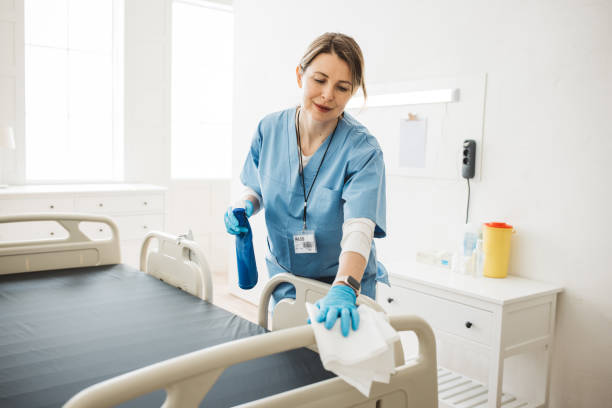
Effective surface disinfection in medical offices goes beyond basic wiping. It requires using EPA-registered disinfectants with proven efficacy against the pathogens of concern, applying products correctly and allowing sufficient contact time for the disinfectant to work, paying particular attention to high-touch surfaces that are frequently overlooked, and documenting disinfection activities for compliance purposes.
High-touch surfaces in a medical office include examination tables, armrests, light handles, countertops, door handles, faucets, paper towel dispensers, and anything else that patients or staff regularly contact. These areas need attention with every cleaning visit, not just periodically.
Waiting Room Hygiene: The Patient’s First Impression
The waiting room sets the tone for the entire patient experience. A well-maintained, fresh, and tidy waiting area puts patients at ease and communicates that your practice takes its responsibility to their well-being seriously. Conversely, dust on surfaces, stained upholstery, or grimy floors immediately raise questions about the hygiene standards in the rest of the office.
Professional medical cleaning services pay particular attention to waiting areas: cleaning and disinfecting chairs and armrests, wiping down side tables and magazine racks, sanitizing toys or play areas where applicable, cleaning windows and glass surfaces, and maintaining floors, carpets, and entryways to a high standard.
Exam Room and Clinical Area Protocols
Exam rooms require a higher level of cleaning rigor than general office spaces. After each patient, high-touch surfaces must be disinfected. At end of day, a thorough cleaning of the entire room — including floor mopping, surface wiping, equipment disinfection, and restocking of supplies — ensures each new patient starts the day in a properly prepared environment.
Clinical areas like procedure rooms, injection stations, and blood draw areas require the most rigorous protocols. These spaces may be subject to specific regulatory guidelines that govern acceptable disinfection methods and documentation requirements.
Staff Safety During the Cleaning Process
Cleaning staff in medical offices face occupational health risks including exposure to bloodborne pathogens, chemical cleaning agents, and biological waste. Proper PPE — including gloves, masks, and eye protection where appropriate — is essential. Staff should be trained in safe chemical handling, proper disposal of waste, and emergency procedures for exposure incidents.
A reputable medical cleaning company invests in robust staff training and safety programs. This protects their employees while also ensuring your facility is being cleaned in a way that does not create additional risks.
Conclusion
In a medical setting, cleaning is patient care. The standards you hold your cleaning program to directly affect the health and safety of every person in your facility. Professional medical office cleaning services bring the expertise, protocols, and dedication needed to keep your practice operating at the highest possible standard of hygiene and care.