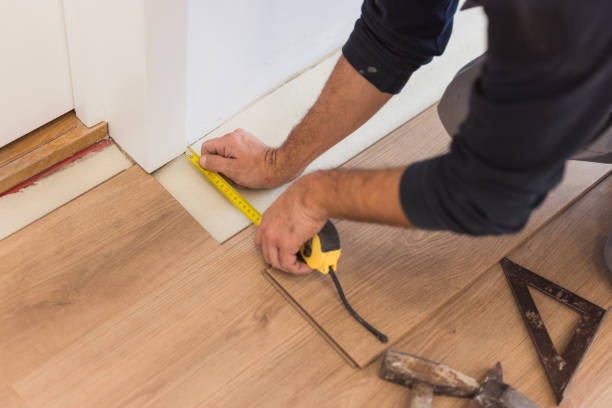
When homeowners are deciding between hardwood and laminate flooring, they’re usually comparing price points and visual preferences. What they’re less often thinking about — because it’s not immediately obvious — is how much the quality of installation matters to the final result. A premium hardwood floor installed badly will fail. A quality laminate floor installed correctly will look great and last for years. The material choice matters. The installation matters just as much.
Professional flooring installation services that handle both hardwood and laminate bring a depth of knowledge that single-specialty installers don’t have. They understand the different technical requirements of each material, the different tools and techniques, and the different subfloor conditions each needs. That breadth of experience produces better results regardless of which material you choose.
Choosing Between Hardwood and Laminate
The decision between hardwood and laminate isn’t just about budget — though budget is a factor. It’s about matching the material to the specific application. Hardwood brings warmth, character, and the ability to be refinished over time to a genuinely different look. Solid hardwood in particular ages in ways that laminate doesn’t, developing a patina that adds to its visual appeal. It’s also a premium feature in real estate, consistently noted by buyers as a desirable quality.
Laminate brings durability advantages in certain applications — particularly scratch resistance, which matters in homes with pets or children. Modern laminate’s water-resistant and waterproof core options make it appropriate in spaces where hardwood would be at risk. And the cost difference allows homeowners to allocate budget elsewhere in a renovation while still achieving a wood-look floor that impresses.
A professional installer’s job is partly to help homeowners make this decision well — ensuring that whatever material is chosen is genuinely appropriate for the space, the subfloor, and the way the room is used.
Subfloor Preparation for Both Materials
Despite their differences, hardwood and laminate share a common requirement: a properly prepared subfloor. Both materials need a surface that is flat, structurally sound, dry, and free of debris. The specific flatness tolerances differ — hardwood is generally more forgiving of minor variation than floating laminate — but both materials will show the flaws in an inadequately prepared subfloor once they’re installed.
Professional flooring installation services begin with a systematic subfloor assessment. Flatness is checked across the installation area. Moisture levels are measured, especially over concrete slabs. Structural issues — loose boards, soft spots, squeaks — are addressed. This preparation takes time, but it’s the work that determines how the finished floor performs.
Transition Details Between Flooring Materials
Most homes have more than one flooring material — hardwood or laminate in living areas, tile in bathrooms and kitchen, carpet in bedrooms. Where these different materials meet, the transition needs to be planned and executed carefully. A transition that’s poorly designed or carelessly installed is visually awkward and can be a trip hazard.
There are several types of transitions — T-moldings for same-height transitions, reducers where one floor is higher than the adjacent one, end caps where flooring meets a vertical surface, and threshold transitions between rooms. The right type depends on the specific situation, and professional installers select and install these correctly as part of the overall installation scope.
Working in Occupied Homes
Flooring installation in an occupied home creates real disruption — furniture has to be moved, rooms are inaccessible during and briefly after installation, and finish processes like hardwood sanding and coating produce dust and fumes. A professional installation team manages this disruption as part of the project.
This means clear communication about what the homeowner should expect at each stage. It means moving and replacing furniture carefully and completely. It means dust containment during sanding operations. It means providing realistic timelines for when finished areas can be walked on, furniture replaced, and rooms returned to normal use.
For hardwood and laminate flooring installed the right way, Cruz Home Construction delivers flooring installation services that make the most of every material and every space.